

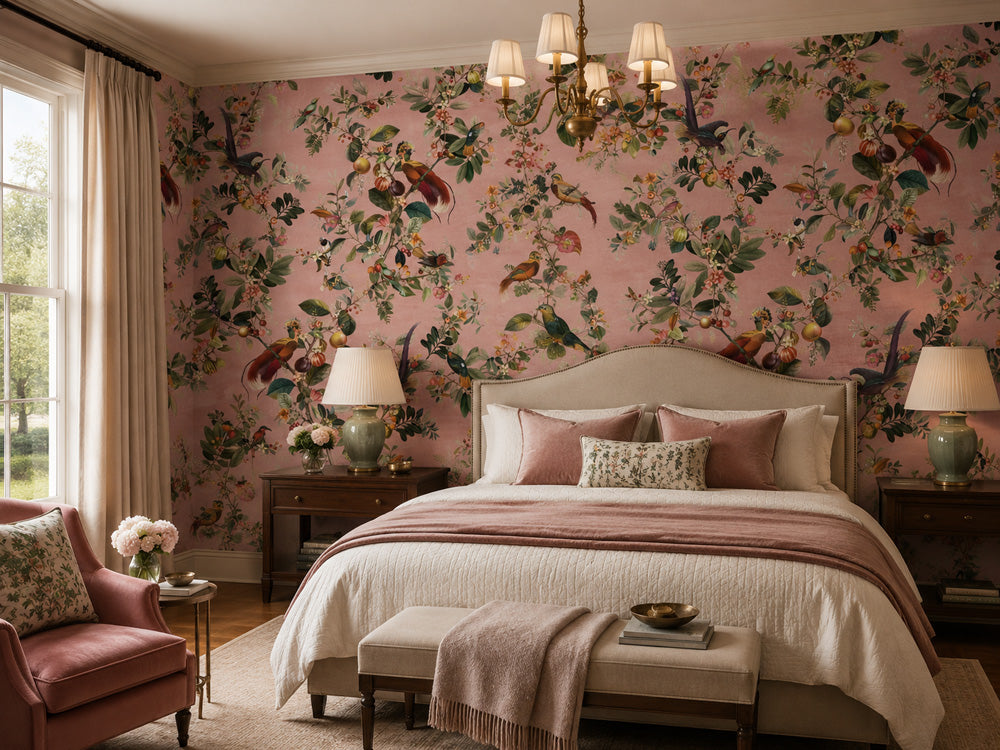
Can wallpaper go directly onto a textured wall?
Sometimes — but the texture of the wall matters much more than many people realise.
Wallpaper performs best on a surface that is smooth, clean, dry, stable and properly prepared. If the wall has texture, two separate problems can occur:
- The wallpaper may not make consistent contact with the surface.
- The wall texture may remain visible through the wallpaper.
This means the question is not simply whether wallpaper will stick.
The better question is:
Will the wallpaper stick properly and still look good once it is installed?
Why wall texture matters
Wallpaper follows the surface underneath it.
If your wall has bumps, ridges, deep roller marks or an uneven plaster finish, wallpaper will not magically make those imperfections disappear.
In fact, certain lighting conditions can make them even more noticeable.
Light coming sideways across a wall — from a large window, for example — can create tiny shadows over imperfections underneath the wallpaper.
This is particularly noticeable with:
- Light-coloured wallpaper
- Minimal designs
- Large areas of solid colour
- Smooth finishes
- Walls with strong natural side lighting
Busier botanical, abstract or darker designs may visually disguise small imperfections better, but they do not solve an adhesion problem.
Very light texture
A very subtle texture may sometimes be suitable after appropriate preparation.
Run your hand across the wall and look at it from the side rather than directly in front.
If the texture is barely noticeable, sanding, cleaning and priming may be enough.
However, we still recommend testing the actual wallpaper material before proceeding with a complete wall.
Medium texture
If you can clearly feel the texture with your hand or see small peaks and valleys across the surface, additional preparation is usually worthwhile.
A skim coat can be applied over the wall to create a smoother surface before sanding and priming.
This extra work may seem unnecessary when you are excited to install the wallpaper, but the wall preparation can make a significant difference to the final result.
Heavy texture
Wallpaper should generally not be installed directly over heavily textured plaster, rough render, brick or similar surfaces.
The wallpaper may only contact the highest points of the wall, reducing adhesion and creating visible pockets underneath the material.
The best approach is normally to create a new smooth surface before wallpaper installation.
Peel & Stick vs Paste the Wall on textured surfaces
Peel & Stick wallpaper relies on consistent surface contact between the self-adhesive backing and the wall.
If the surface is significantly textured, the adhesive may only touch the raised areas.
For that reason, Peel & Stick is best installed on smooth surfaces.
Paste the Wall wallpaper also performs best on a smooth wall, although the separate wallpaper adhesive can make it a more appropriate option for some long-term installations once the wall has been correctly prepared.
Neither product should be used as a shortcut for fixing a poor wall.
A simple test before ordering
Before purchasing wallpaper for a textured wall:
Step 1: Look at the wall under daylight and artificial light.
Step 2: Run your hand across the surface.
Step 3: Hold a straight object against the wall and look for significant gaps underneath it.
Step 4: Check for loose paint, dust, cracks or moisture.
Step 5: Order a wallpaper sample and test it on the actual surface whenever possible.
A few minutes spent assessing the wall can prevent a much larger problem after installation.
Should you choose a darker design for an imperfect wall?
Potentially.
A darker, detailed or painterly wallpaper can make subtle surface irregularities less noticeable than a very pale design with large areas of flat colour.
But design should only be considered after the wall is structurally suitable.
A beautiful pattern cannot compensate for loose paint, moisture, deep texture or an unstable surface.
When should you call a professional?
Consider speaking with a wallpaper installer or plasterer when:
- The texture is clearly visible
- The wall has previously been repaired
- Paint is peeling
- The wall has moisture damage
- You are unsure whether it requires skim coating
- The project involves an expensive custom mural
Preparing the surface correctly is almost always cheaper than replacing wallpaper after an unsuccessful installation.
Final advice
Wallpaper can absolutely transform a textured-wall room — but the transformation begins before the wallpaper goes up.
For the best finish, think of the wall as the canvas.
The smoother and more stable the canvas, the better the finished wallpaper will look.
Kaleon Wallpaper prints custom wallpaper and wall murals in Sydney, Australia, with both Paste the Wall and Peel & Stick options available for a wide range of interiors.


